


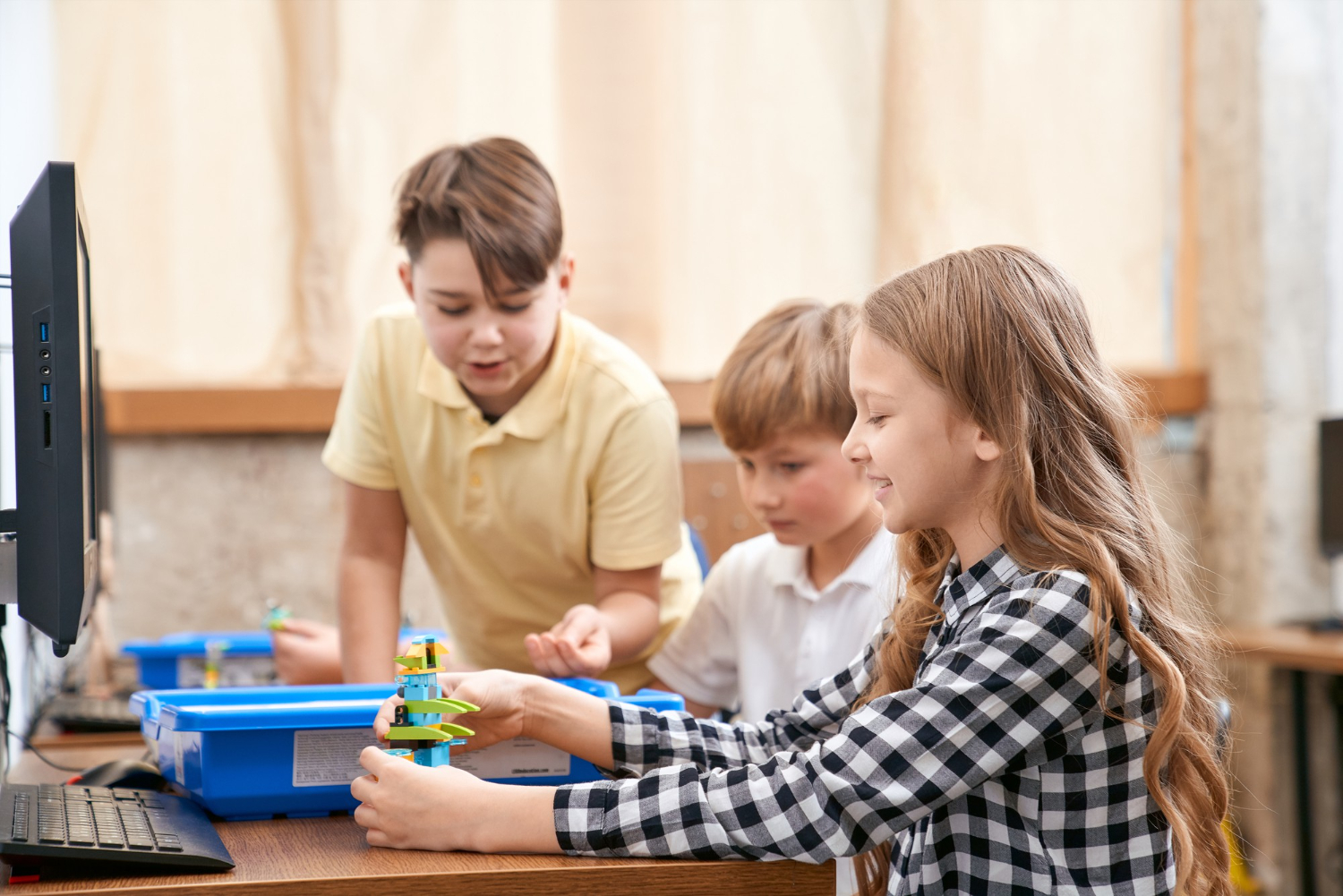
At Futurebytes, we are dedicated to shaping the innovators of tomorrow. With a mission to make learning accessible and engaging, we’re excited to inspire young minds this summer and beyond. See you this summer at Futurebytes—where curiosity meets creativity!
Preparing children for future skills can begin with ordinary habits: explaining an idea, trying a strategy, listening to another person, and checking a result. A child does not need a competition schedule or an early career plan to practice them. Choose projects that invite effort while leaving room for play and other parts of childhood.
Choose a manageable challenge
Give a project a clear purpose and a limited number of constraints. A cardboard container that carries several blocks across a room can prompt planning and testing without expensive equipment. Let the child select a design and decide what to change after the first attempt.
Adjust the task if the demands prevent meaningful participation. A younger learner might draw a plan while an adult assists with a difficult cut. Developmentally appropriate practice considers individual strengths and context, which helps keep the challenge suitable. [1]
Use feedback that points to the work
Discuss a specific decision rather than labeling the child as naturally gifted or comparing them with someone else. 'Your wider base kept the model upright' gives them information they can use again. Ask what evidence led them to the next change.
Collaboration needs similarly concrete practice. Partners can each propose a design, compare the ideas against the goal, and agree on a test. Young learners may need an adult to model how to disagree respectfully and make a shared decision.
Let progress include reflection and rest
Keep a few sketches or photos of different project versions. Review what became clearer over time, including a mistake the child learned to investigate. Avoid treating every session as a performance to rank.
The Exploratorium's Tinkering Studio provides examples of hands-on exploration that families can use to generate ideas. [2] Bay Area parents seeking STEM enrichment can ask how a class supports experimentation when there is no contest or score. A sustainable routine leaves the child willing to try another question. Future preparation is more useful when it builds habits the child can practice now, with enough time and support to understand them.
Resources