

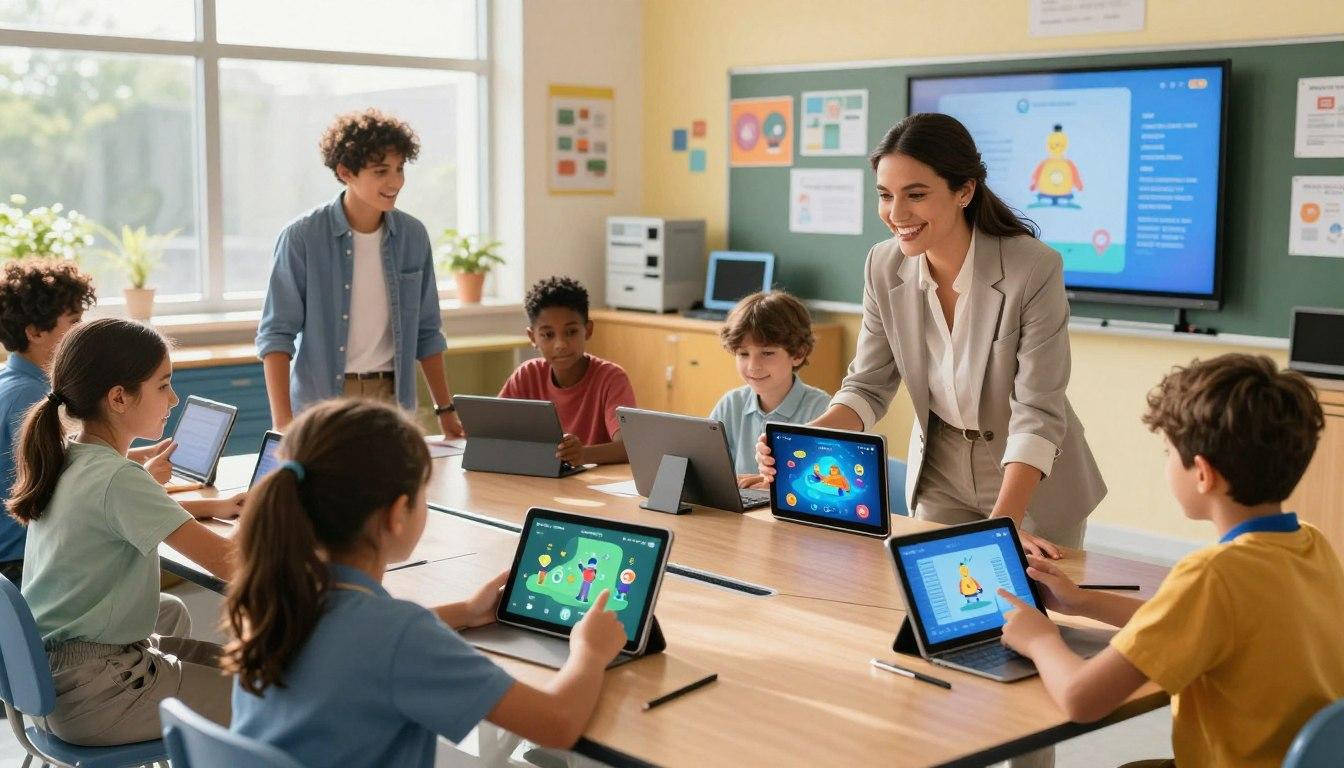
At Futurebytes, we are dedicated to shaping the innovators of tomorrow. With a mission to make learning accessible and engaging, we’re excited to inspire young minds this summer and beyond. See you this summer at Futurebytes—where curiosity meets creativity!
Artificial intelligence, or AI, is software that performs tasks such as recognizing images, finding patterns, or generating text. For children, a useful starting point is understanding how a machine makes a prediction and why that prediction can be wrong. AI for kids can begin with questions about familiar objects, long before anyone opens a chatbot.
Explain AI with an everyday example
Imagine teaching a computer to recognize a bicycle. Instead of describing every possible bicycle, people can give a machine learning system many labeled pictures. During training, the system adjusts its internal settings to recognize patterns associated with that label. When shown a new picture, it makes a prediction. This is one kind of AI; some AI systems also use explicitly programmed rules. [1]
A photo of a bicycle partly hidden behind a tree might confuse the system. That mistake helps children understand a key idea: a useful prediction is still something to check.
Try a sorting activity together
Put picture cards of bicycles and scooters on a table. Ask your child which features distinguish them, then introduce an unusual example. A scooter with large wheels might expose a weak sorting rule. Explain that people decide what examples to collect and how to label them. The examples influence what a trained model learns.
This is an analogy for learning from data, rather than a working AI model. Keeping that distinction clear prevents children from thinking that every sorting game is artificial intelligence.
Keep the first lesson practical
Ask three questions: What information did the system use? What did it predict? How could we check it? For generated stories or pictures, add that an output can look convincing while containing errors. Avoid describing AI as a person who knows or feels things.
Bay Area families exploring beginner AI education can look for lessons that connect data, predictions, and human responsibility. Children should leave able to explain one example in their own words. That is a more useful first milestone than memorizing technical terms. [2]
Resources