


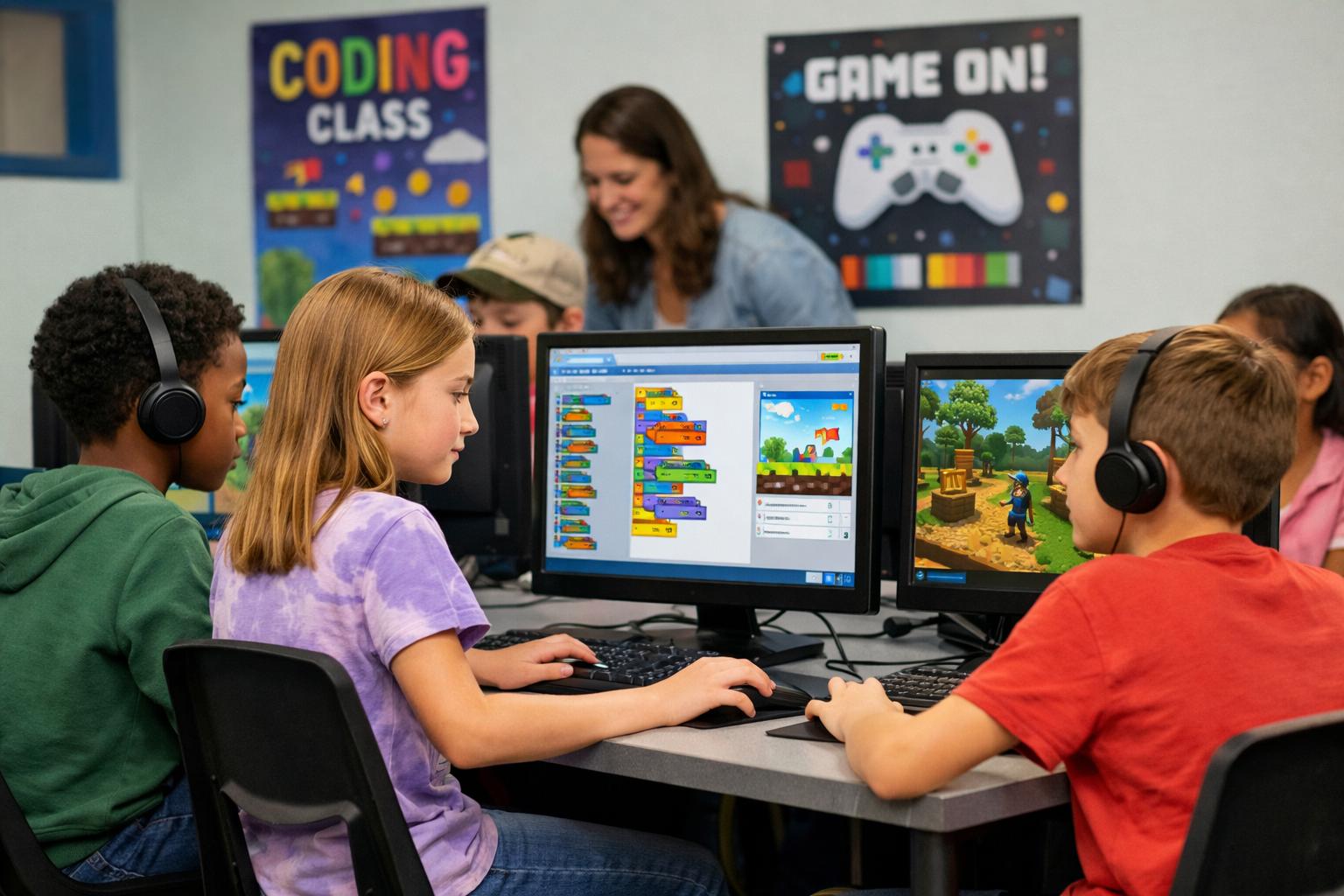
At Futurebytes, we are dedicated to shaping the innovators of tomorrow. With a mission to make learning accessible and engaging, we’re excited to inspire young minds this summer and beyond. See you this summer at Futurebytes—where curiosity meets creativity!
Game design teaches coding when children turn an idea into rules that a program can execute. They decide what the player can do, what changes in response, and how the game ends. Creativity provides the setting and purpose; logic makes the experience behave consistently.
Turn the story into rules
Imagine a rescue game in which a player guides a boat toward stranded animals. Begin on paper. Which keys move the boat? What happens when it reaches an animal? How will the player know that the rescue is complete?
These questions define game states and transitions. A variable can record the number of animals rescued. A condition can trigger the ending when that number reaches the target. An event can begin the game or respond to a player's input. Explain each concept when the design needs it.
Build one interaction before the whole world
Create a small playable version with one rescue target. Test movement and collection before adding scenery or extra levels. This helps the child identify which part of the system causes a problem.
Roblox's educational materials include game creation and coding tutorials, and Roblox Studio uses the text scripting language Luau. [1] A visual coding environment may be a more accessible first step for a learner who is still developing reading and typing skills. The tool should fit the child and the project's complexity.
Use playtesting to improve the design
Let another person try the game without detailed coaching. If they cannot find the goal, the instructions or visual cues may need work. If the boat moves too quickly, adjust the speed and compare the experience. Keep notes on the change and the reason for it.
For Bay Area game design classes, ask whether children write or modify behavior as well as decorate worlds. A meaningful project includes an original decision, a working interaction, and a revision based on feedback. At home, ask your child to explain one rule and show where the program implements it. That links the imagined game to the technical work.
Resources