


At Futurebytes, we are dedicated to shaping the innovators of tomorrow. With a mission to make learning accessible and engaging, we’re excited to inspire young minds this summer and beyond. See you this summer at Futurebytes—where curiosity meets creativity!
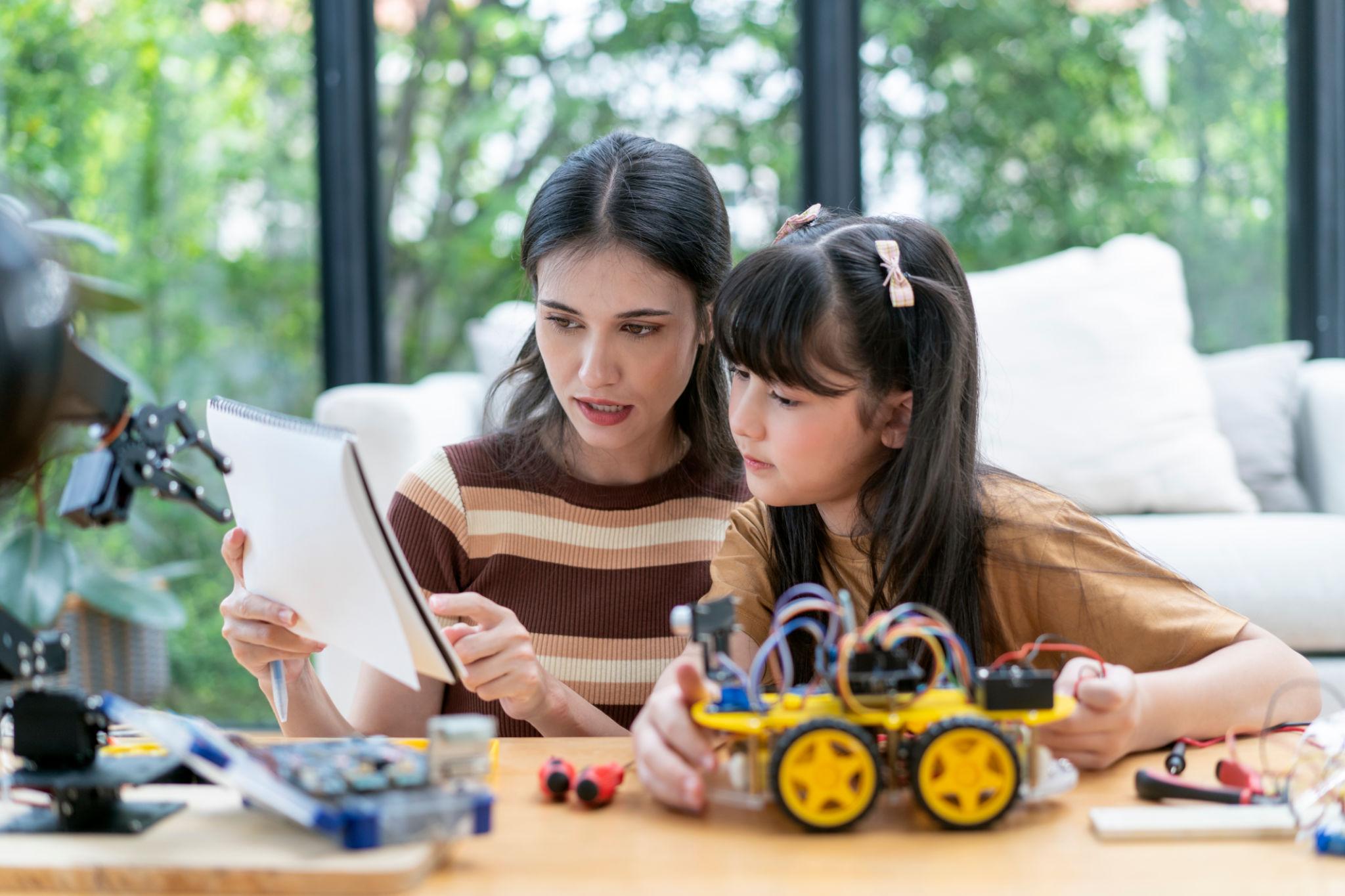
Robotics can be a useful introduction to engineering for young children when the parts, instructions, and lesson pace are manageable. A child can see a direct relationship between a physical build and a programmed action. The first experience should leave time to explore that relationship, rather than rush toward a complex machine.
Introduce one system at a time
A motor produces movement. A sensor measures something, such as distance or color, depending on the equipment. A controller runs the instructions. Begin with a single motor action before asking the child to coordinate several components.
A simple barrier that opens and closes can create a clear first challenge. The learner might change the opening time and observe the effect. Later, a suitable sensor can provide information that triggers the opening. These are example activities; ask the provider which equipment and projects its introductory class actually uses.
Check the demands of the materials
Find out whether the child needs to read labels, use tools, or assemble small connections. Ask how adults supervise moving parts, batteries, and pieces that are difficult for small hands. A kit's stated age or grade range should be considered alongside the support offered in class.
LEGO Education and VEX provide educational construction systems and teaching resources, with different products serving different learning stages. [1][2] The brand alone does not tell you whether a particular project is suitable for your child.
Observe participation rather than speed
Look for time spent handling the parts, choosing an instruction, and checking what happened. A child who explains why a model moved differently has done useful work even if another child builds faster.
Bay Area parents comparing robotics classes for young kids can ask about kit sharing, breaks, and support when a learner gets stuck. Start with a short introduction if the format is unfamiliar. If the child remains curious but needs help with a component, discuss an adjustment. Robotics should offer a challenge the child can approach, with adults making the tools and environment suitable.
Resources
[1] LEGO Education — SPIKE Essential information and resources