

At Futurebytes, we are dedicated to shaping the innovators of tomorrow. With a mission to make learning accessible and engaging, we’re excited to inspire young minds this summer and beyond. See you this summer at Futurebytes—where curiosity meets creativity!
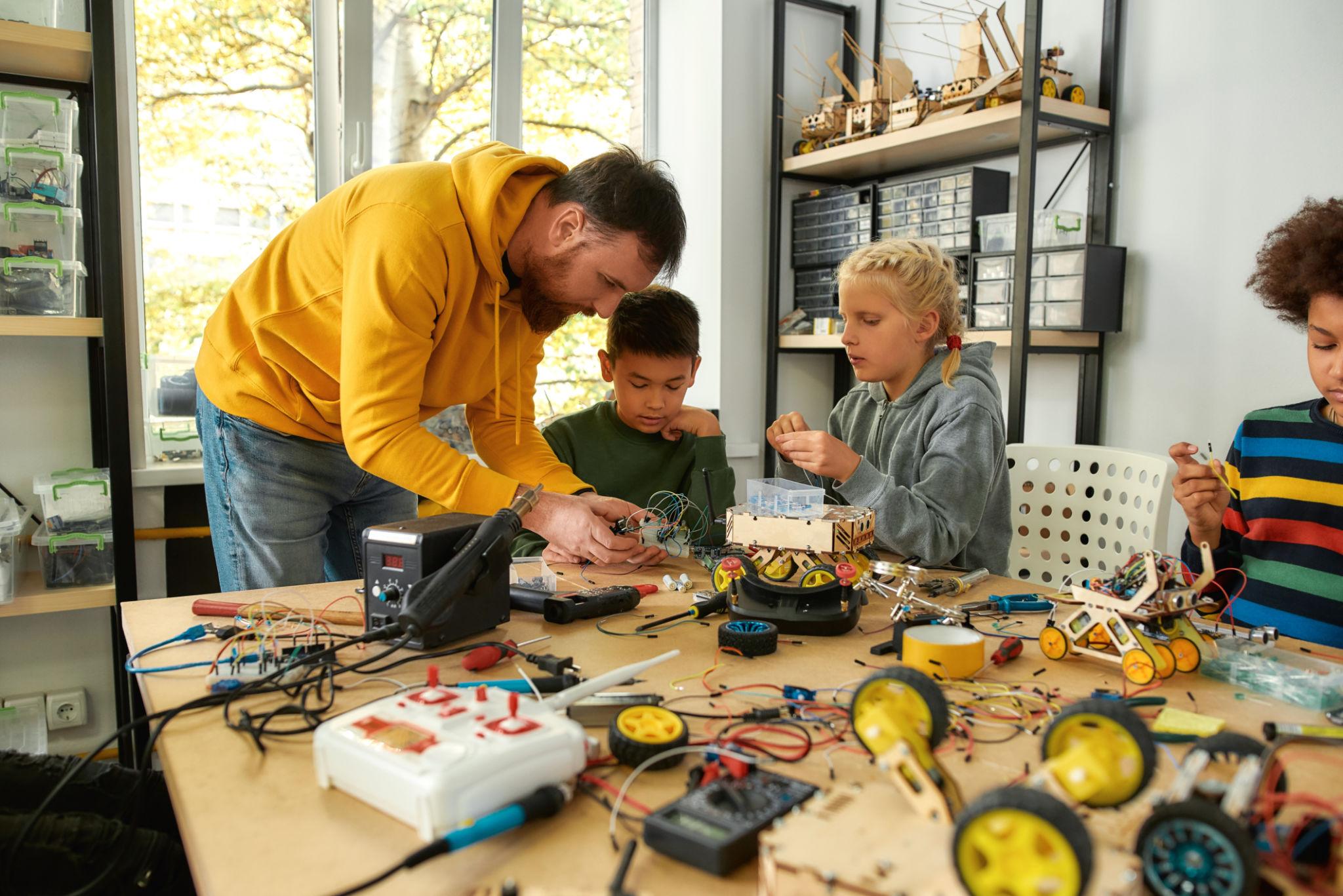
At Futurebytes, robotics, coding, and AI are organized as related learning pathways with different technical goals. Robotics connects instructions to physical behavior. Coding helps children express actions and decisions precisely. AI introduces systems whose behavior can depend on learning from data. Understanding those differences helps families choose an appropriate starting point.
Build foundations through visible behavior
Our published robotics pathways progress from introductory construction and control toward more complex engineering. In coding and AI, Futurebytes lists Scratch for ages 7–10, Python for ages 8–13, and an AI and machine learning pathway for ages 10–13. [1] These overlapping ranges offer options rather than a single compulsory order.
A useful progression connects an instruction to an observable result before adding complexity. A child can begin by making a character move, then explain how a condition changes its response. A physical robot adds questions about construction and its surroundings.
Make the distinction between coding and AI clear
A programmed rule might say, 'If the sensor detects an obstacle, stop.' A trained classifier uses learned patterns to predict a category for a new example. Both involve computation, but the source of the behavior differs. Introductory AI learning should include the examples used and the possibility of mistakes. [2]
A sensor-based robot is not automatically a machine learning system. Keeping the terminology accurate helps children understand what the project actually demonstrates.
Use reflection to connect the subjects
Futurebytes' DISCOVER framework includes creating, experimenting, and reflecting across programs. [3] A shared question such as 'What information did the system use?' can connect a robot's measurement, a game's input, and an AI model's examples.
Silicon Valley families comparing robotics, coding, and AI classes can ask which idea the first project teaches and how the next level builds on it. Confirm the current entry requirements and teaching tools. We encourage families to choose a pathway with a clear starting purpose, then use the child's experience and explanations to discuss the next step.
Resources