


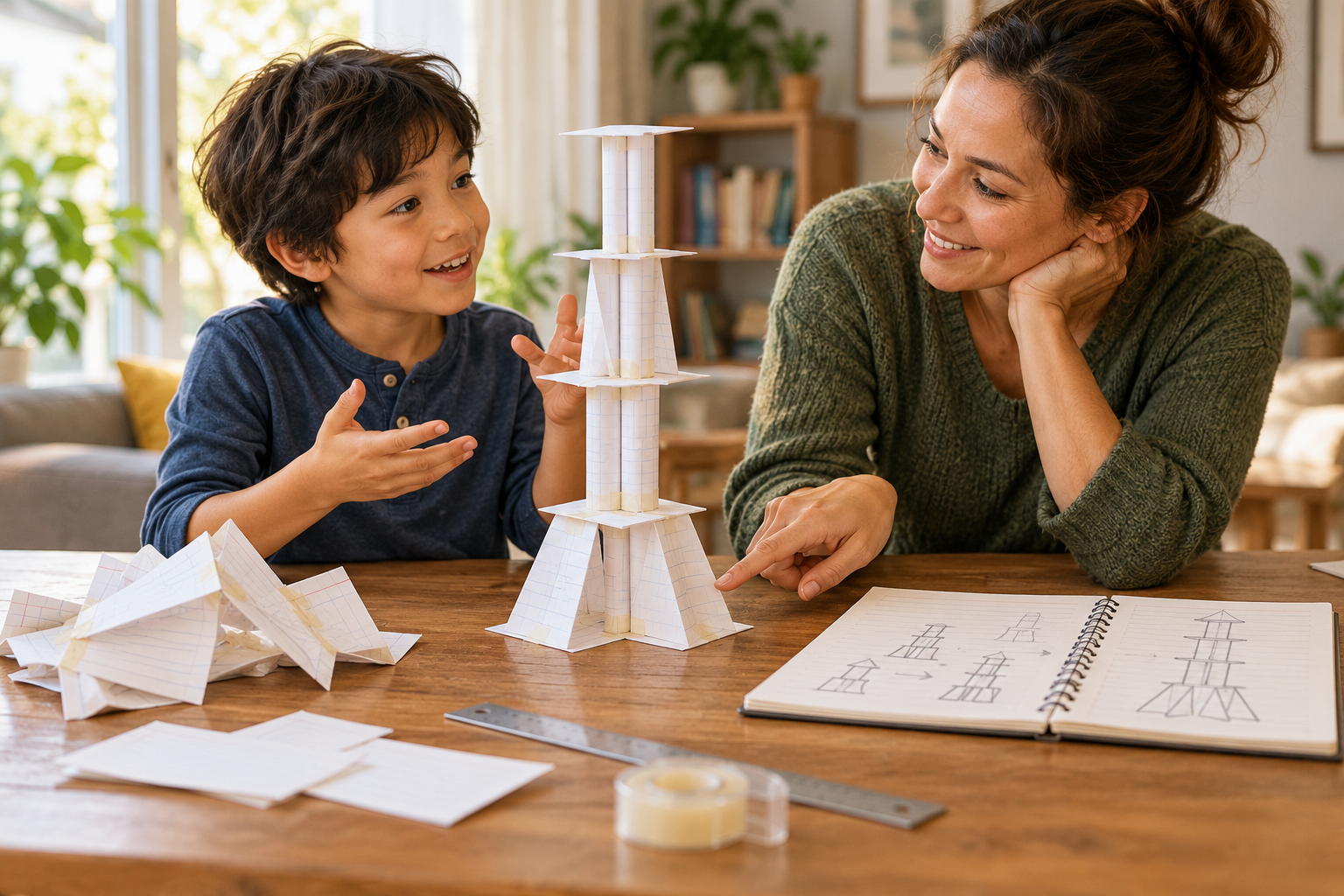
Completing a challenge is great, but celebrate the journey as well! Recognize the creative thinking, persistence, and problem solving they demonstrate.
Helpful feedback tells a child what you noticed about their thinking. During a STEM project, an observation about a revised base or a careful test is more useful than a general verdict about talent. It gives the learner a strategy they can recognize and use again.
Name an action the child can understand
Describe the behavior and its visible effect. You might notice that folding a support made it stand upright, or that checking the drawing revealed a missing connection. NAEYC recommends specific feedback and encouragement suited to what a child can currently do. [1]
Effort alone does not identify a useful next step. If the same approach keeps failing, help the child choose a different strategy, find a hint, or pause. Ask what they are pleased with and what still needs work. Their own assessment deserves time before another adult suggestion.
Build a paper tower and record the changes
Materials: Ten index cards or similar paper pieces, a limited strip of masking tape, a ruler, and a pencil. Use the same materials allowance for each attempt and build on a stable tabletop.
- Choose a clear goal. Make a freestanding tower that remains upright for ten seconds. Let the child decide whether to begin with folded supports, stacked shapes, or another plan they can describe.
- Keep a short record. After each attempt, sketch the tower and note what happened. Record its height only after it passes the stability test, so speed or height does not replace the agreed goal.
- Offer useful feedback. Mention one observed choice, such as a wider base, and ask whether it helped. Invite the child to choose the next change and test it before adding another idea.
Leave room for the child to judge progress
A tower can improve by becoming steadier even if it becomes shorter. Ask which tradeoff the learner chose and why. The record gives both of you something concrete to discuss, including an attempt that provided information without producing a successful structure. Stop before feedback turns play into a performance review.
Resources